
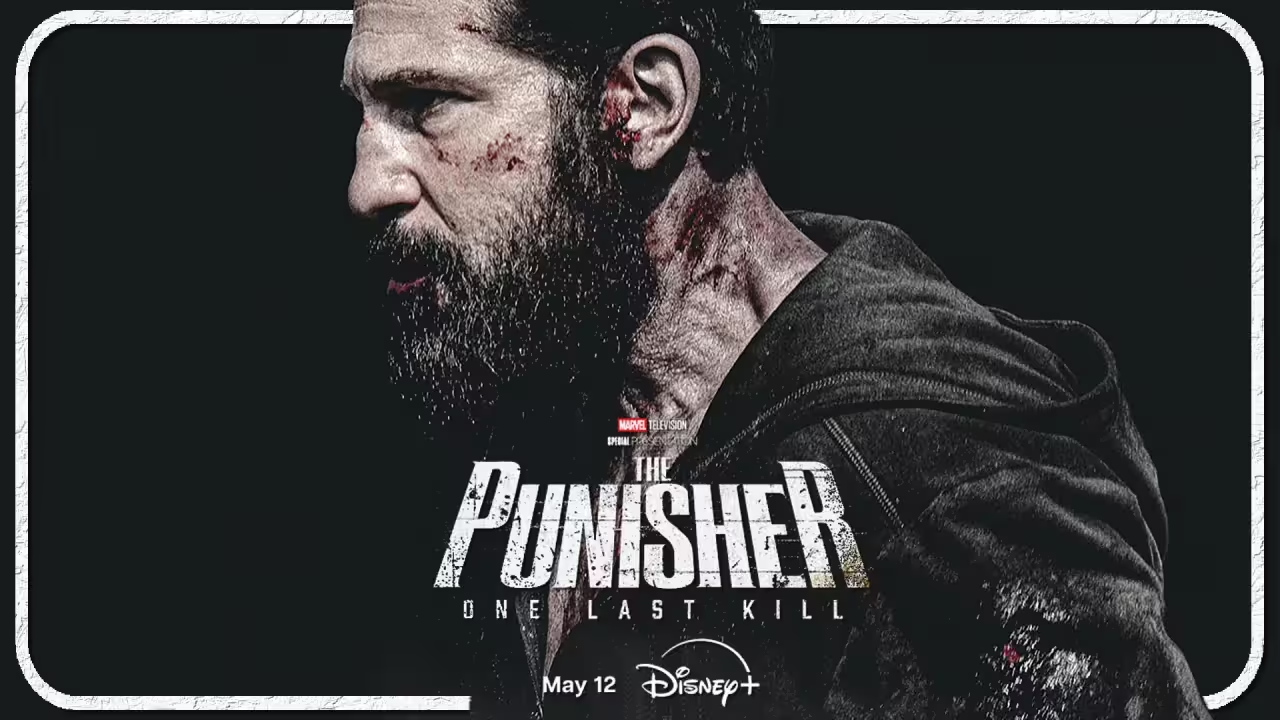
The Punisher: One Last Kill, Marvel Studios’ special presentation dedicated to the iconic character and released on Disney+ on May 13, left us with a strange feeling. And, as you can already tell from the review’s rating, we don’t necessarily mean that as a negative: the short format, akin to a true mid-length film, continues to strike us as a more than apt choice to give space and justice to small corners of the MCU; Jon Bernthal is, once again, exceptional in the role; and the Punisher’s signature violence was certainly not held back. In short, there is much to appreciate in this One Last Kill, and we sincerely hope that Marvel continues to focus more and more on these special presentations; we are eagerly awaiting the sequel to Licantropus (you can read our review of Licantropus here).
At the same time, many details regarding Frank’s continuity seemed somewhat muddled to us, and a couple of stylistic decisions didn’t bring much benefit—quite the opposite, in fact. All things considered, the special entertained us, even if it didn’t quite thrill us to the core.
The Return of Frank Castle
But, as usual, the initial question remains unavoidable: what exactly is The Punisher: One Last Kill about? Set technically before and during the second season of Daredevil: Born Again, the special finds the eponymous protagonist in a moment of profound crisis. We reconnect with a lost, desperate Frank (Jon Bernthal), adrift and directionless, haunted only by the voices of those close to him—from the family torn from him to the familiar faces of Curtis (Jason R. Moore) and Karen (Deborah Ann Woll). But they are only ghosts, and the only possible way out seems to be suicide—until a mysterious woman forces him to participate in a brutal, deadly game.
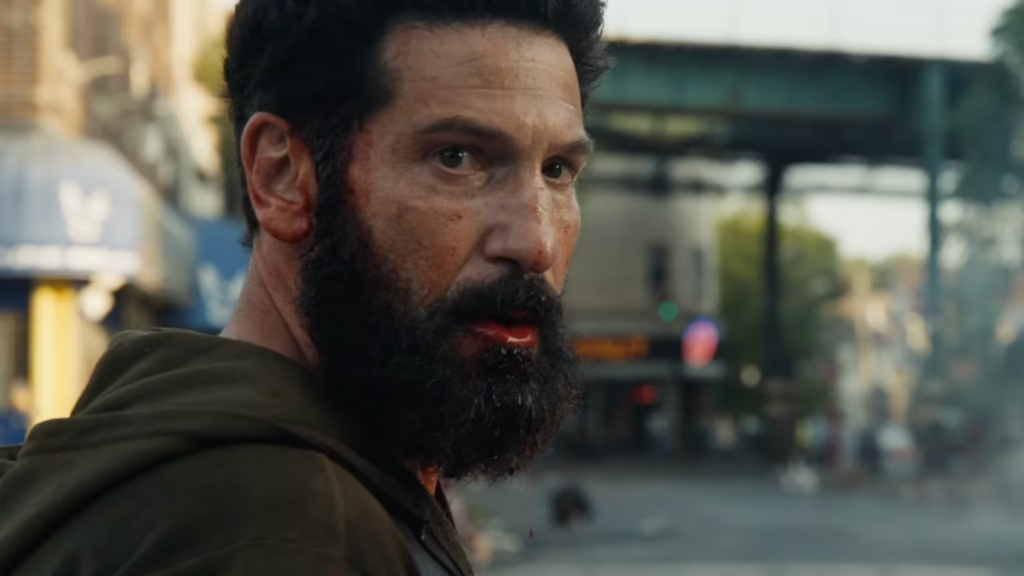
The central theme of One Last Kill is one and only one: finding, at any cost, a reason to keep going day after day—and what might happen to a man as unstable as Frank Castle if he loses that purpose. The entire first half of the special is devoted solely to an exploration of the protagonist’s psyche, tormented by constant voices mocking him while he simply wishes not to feel so alone, even as he fully understands that he can never escape such loneliness. A journey that is certainly brief (the entire special runs just over 40 minutes, after all), but fascinating and featuring a decent, evocative, and at times surreal mise-en-scène.
6:47, the perfect hour
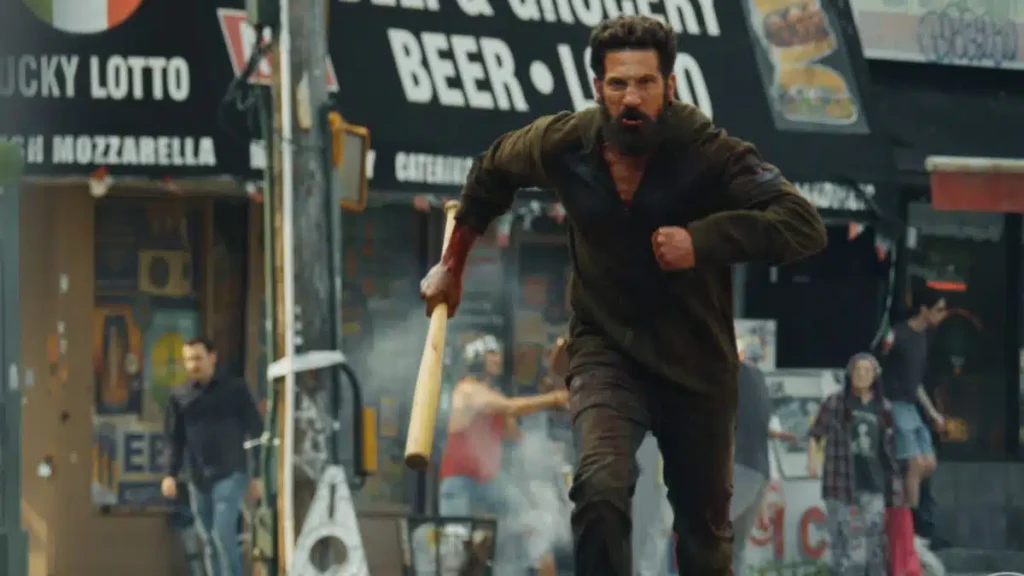
The other half, however, we find rather predictable (as well as inevitable): it’s a non-stop bloodbath in which Frank’s true nature finally emerges and annihilates anything that stands in his way, with a delightful climax that depicts increasingly bloody and over-the-top killings. And here, it doesn’t take much to make these sequences satisfying, between a direction that’s clean and effective overall and nods to John Wick (mainly the third installment, or at least its premise, let’s put it that way). It works, aside from a couple of too-many slow-motion shots and exaggerated nods to the character’s “edgier” side, which sacrifice potentially meaningful moments on the altar of being “cool” but a bit hollow.
The most significant issue with One Last Kill, however, lies—in our view—on the conceptual side: it’s truly difficult to place this version of Frank within the MCU. As previously noted, the special’s placement has been clarified, yet there’s no reference to Born Again or the situation in which we left the Punisher at the end of the first season. These seem like entirely different interpretations of the character, and the special positions itself more as a direct sequel to the Netflix series (in fact, the presence of Curtis and others makes watching the show beforehand almost a prerequisite)—discrepancies that only serve to heighten our frustration with a Marvel that has been unable to maintain even a superficial consistency in its universe for so many years now.
All in all, The Punisher: One Last Kill represents another victory for Marvel and its increasingly intriguing format of special presentations. The medium-length film dedicated to Frank Castle, in fact, does not disappoint: a very introspective first half focused on restoring a sense of purpose to a lost and broken protagonist is followed by a second act that can be described in no other way than as a fierce and thrilling bloodbath. A straightforward special that, however, consistently hits the right notes and is staged with decent verve, despite a few too many slow-motion shots and exaggerated nods to the character’s “edgier” side. For us, however, the main issue with One Last Kill is conceptual: this portrayal of Frank Castle has nothing to do with the Punisher we met in Daredevil: Born Again (and there is no explicit connection). They seem like radically different interpretations, to the point that this special feels more like a direct sequel to the Netflix series. Details, however, that have been repeating themselves for years in an increasingly frayed and inconsistent MCU.
