
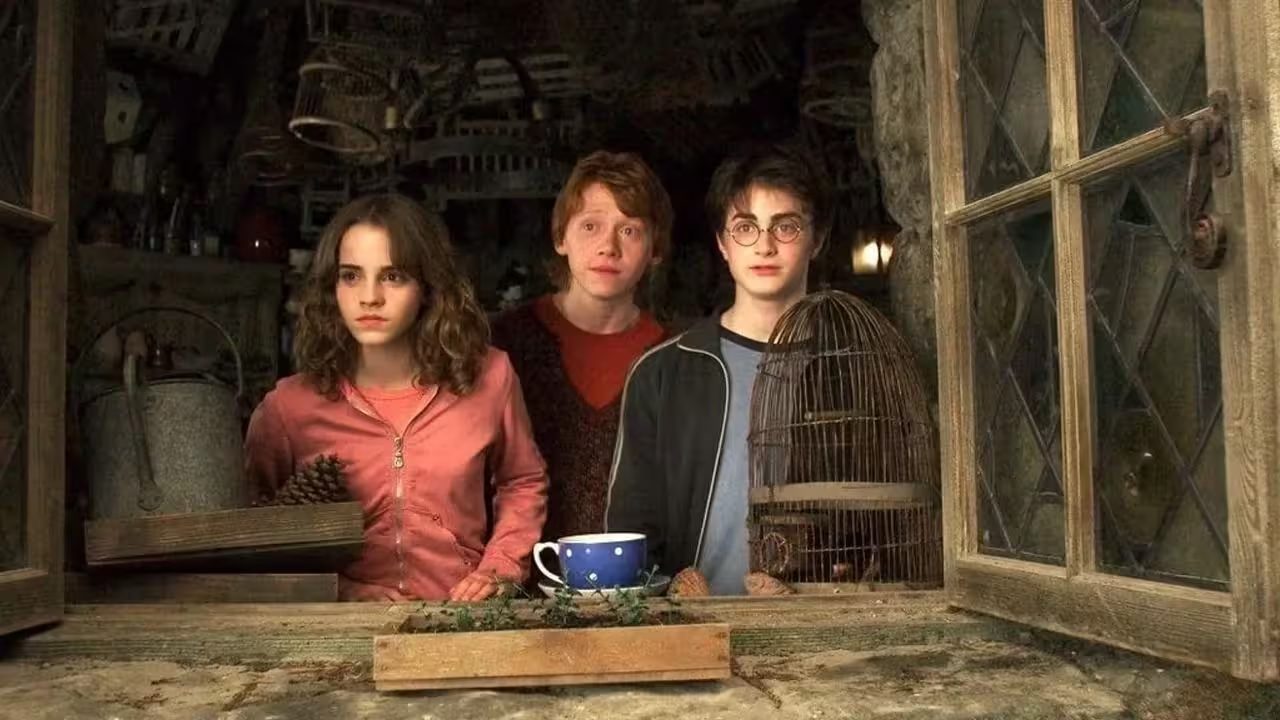
Although Harry Potter has become a cultural phenomenon that, 15 years after its conclusion, remains hard to top, the film series has installments that fans prefer over others, and one that frequently tops the list is Harry Potter and the Prisoner of Azkaban, the third adaptation that hit theaters in 2004, directed by Alfonso Cuarón. The story depicted in J.K. Rowling’s novels hit theaters in 2001 with the release of Harry Potter and the Sorcerer’s Stone, an adaptation followed by the second installment, also directed by the same filmmaker: Chris Columbus.
The American director had brought the magic of Christmas to the big screen years earlier with Home Alone, so it wasn’t difficult for him to translate the fantasy of the books to the cinema, although the third film required an almost radical change. In Harry Potter and the Prisoner of Azkaban, the trio of protagonists is no longer the same group of innocent children who arrived at Hogwarts with enthusiasm two films earlier, but are now three students and friends entering adolescence: more rebellious, curious, and unable to sit still. Chris Columbus was ready to step down, but first he needed to find the perfect successor to carry out this transition in the characters and the atmosphere of the saga.
Alfonso Cuarón brought the coming-of-age theme to the Harry Potter saga in The Prisoner of Azkaban
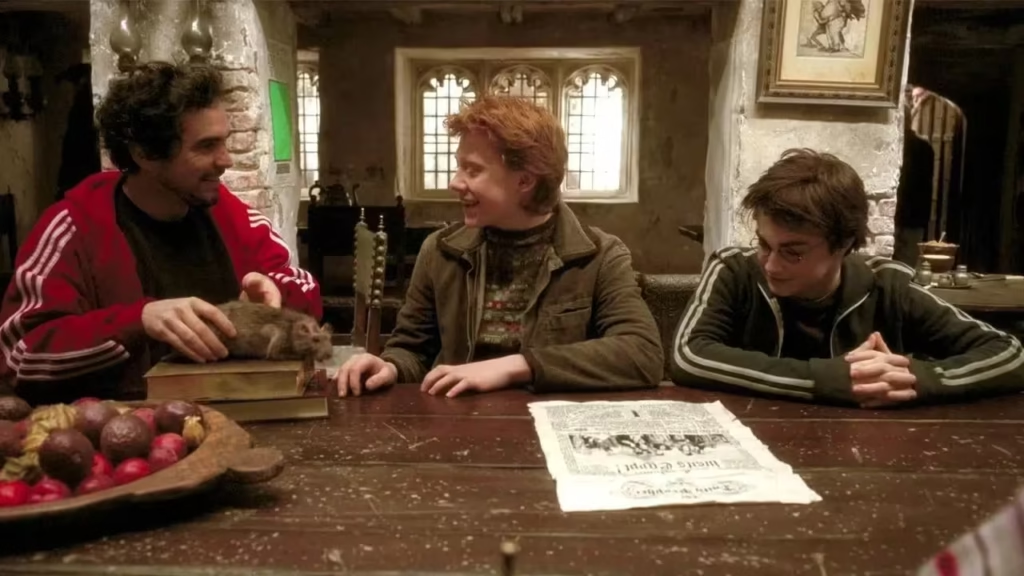
That was when the Mexican director entered the picture—someone who was no stranger to Hollywood productions (Great Expectations and The Little Princess) and who, just three years earlier, had released a film that elevated his country’s cinema: And Her Mother Too. How does one go from filming a feature-length movie brimming with eroticism to directing the third installment of a Hollywood saga whose primary audience is children? Easy—both productions depict a coming-of-age story.
While in the 2001 film we see the Charolastras (played by Gael García Bernal and Diego Luna) vying for the attention of an adult woman, in Harry Potter and the Prisoner of Azkaban we see Harry, Ron, and Hermione leaving behind the childish, school-oriented image of the first two installments to begin investigating the dark side of magic on their own. Both represent two journeys—one by road and the other through time—and although they are significantly different productions, Cuarón was the ideal choice to join the Warner Bros. saga, lending a darker tone to the film and marking the transition from childhood to adolescence for Rowling’s characters.
The film remained family fantasy, but now with a more overwhelming, youthful, and sinister edge—elements that were evident not only in the actors’ maturation but also in the visual aesthetic and its narrative, which unfolds as a time loop. Harry Potter and the Prisoner of Azkaban was a hit with both audiences and critics, and is often cited as the most “cinematic” film in the series and the adaptation most beloved by movie buffs and fans of the story. Without Alfonso Cuarón and his coming-of-age touch in the third installment, the film series might have turned out quite differently in the subsequent releases. Don’t forget that you can rewatch the entire saga on HBO Max before the new series premieres.
