
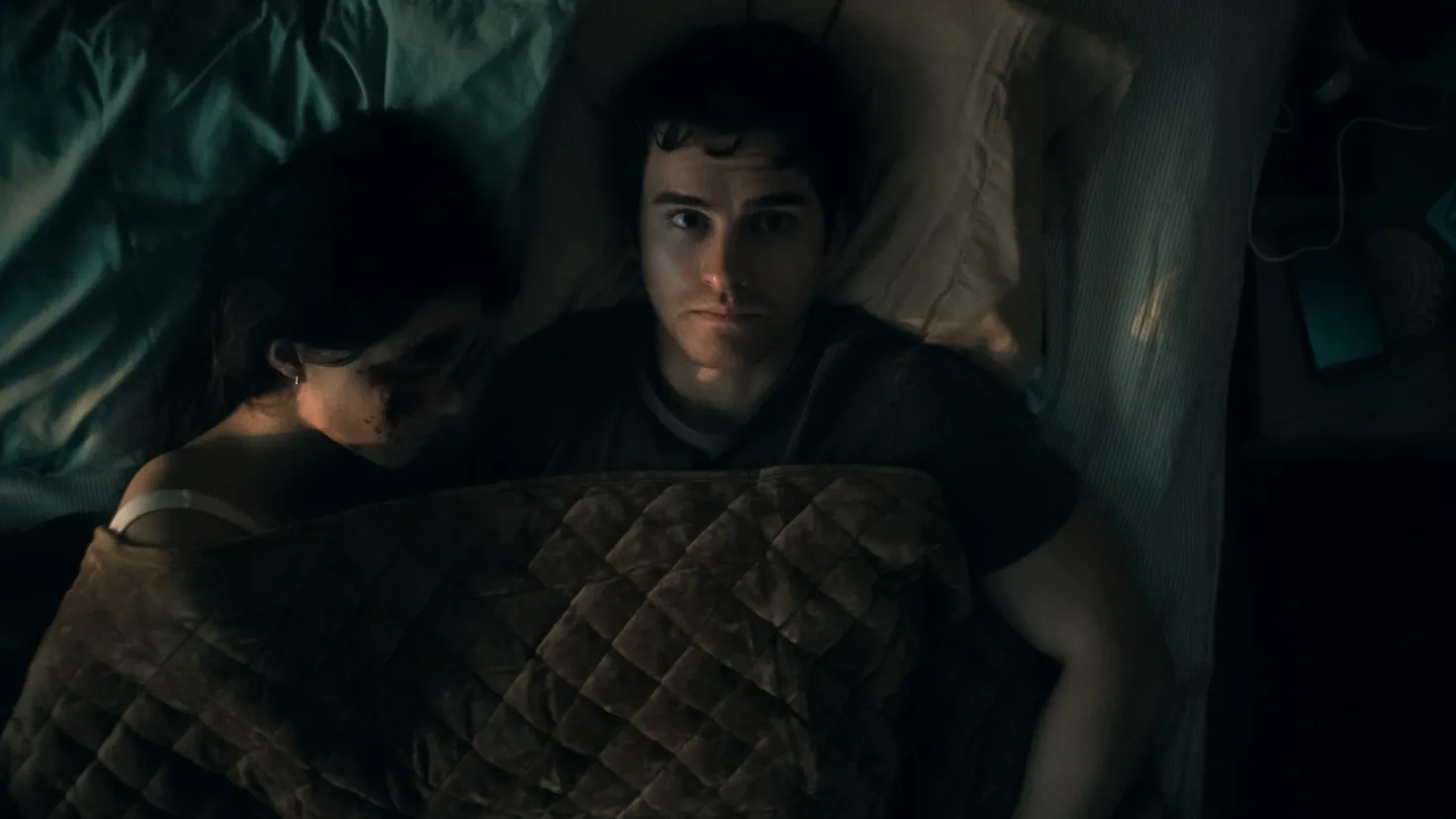
If you’ve seen his previous work, you’ll know that Curry Barker, at the tender age of not quite 27, is an unyielding pessimist. After uploading the bleak found-footage film Milk and Serial to YouTube (no one wanted to buy it), he produced Obsession with A24, a film that hit theaters just a few days ago and which, if possible, is even darker and crueler than his first feature film. Barker, who—along with Cooper Tomlinson—forms a comedy duo much like Jordan Peele and Keegan-Michael Key, clearly has a twisted mind, a fierce dark sense of humor, and a deep-seated distrust of friends and humanity in general.
We won’t spoil the first film—enjoy the surprise—but we can mention that one of the key themes is gaslighting. In Obsession, it’s the control of the female body. The shy childhood friend of a beautiful, intelligent, and assertive girl expresses the desire for her to love him “more than anything else in the world,” with dire consequences—yet predictable for anyone who’s watched any cautionary tale about desires (on that note: there’s a fantastic teen horror K-drama on Netflix with this theme, titled Girigo — If Wishes Could Kill; check it out).
Bear is a young man who grew up in a close-knit circle of friends consisting of his best friend Ian; Sarah, a goth girl who has a crush on him; and Nikki, who likes him but has never considered him as a romantic interest. Bear isn’t an incel—he doesn’t rant against women on online forums, he doesn’t spout nonsense about how women who won’t sleep with him are all whores, he doesn’t preach that women should stay home and obey—but he has a problematic and immature relationship with the opposite sex and suffers from an incurable cowardice that prevents him from admitting his feelings even when directly asked. When Nikki herself explicitly asks him if he has a crush on her, he denies it, only to fantasize about grand declarations in private. Bear cultivates an increasingly all-consuming obsession with his beloved, until a wish-granting contraption comes his way that fulfills his dream of being reciprocated. The obsession shifts to Nikki, who begins to live, literally, for Bear.
Obsession follows the recent trend of horror films about toxic relationships, such as Together and Keeper, but it is far more gruesome and cruel than either of them. As mentioned, Barker’s cynicism knows no bounds, and the portrait of relationships he paints is terrifying: Bear is a mediocre young man who isn’t satisfied with the attention he gets from the goth girl because he sees her as an outsider. He wants the popular, perfect girl who will make him feel “valuable,” through whom he could bask in her reflected glory, but she doesn’t give him the time of day.
While he initially comes across as a “good guy”—after all, he’s just an insecure, weak boy, almost endearing—as the situation deteriorates, he reveals himself to be the perfect product of patriarchal arrogance. Nikki hasn’t truly fallen in love with him; she is trapped in her own body alongside an alter ego obsessed with Bear. The two personalities are in conflict, but only the one attracted to Bear has control over her actions, while the real Nikki suffers involuntarily, in what is an extreme parable of domestic rape. The girl is, in fact, always conscious while her alter ego and Bear abuse her body.
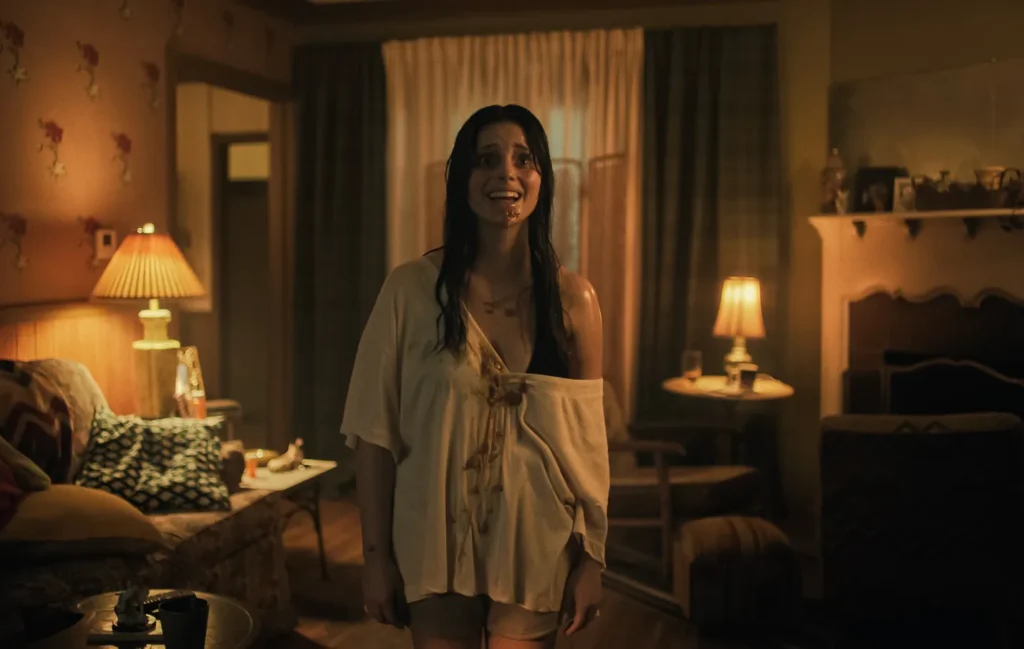
Her reality is not far removed from what women as a whole have experienced over the centuries and up until just a few years ago (in this part of the world). Until women had the right to hold a bank account, buy land and homes, inherit property, and choose not to have children, they lived at the mercy of men. Of this long, millennia-old tradition of women deprived of rights over themselves and their own bodies, Nikki is the most chilling and extreme example. But the situation is even worse than that. Bear is aware of the torture imposed on the real Nikki, but he doesn’t want to give up the relationship with her obedient and loving version.
Only later—and not because he feels guilty (it is not just her mind, but also Nikki’s body that is ravaged by acts of self-harm)—but rather because he is disturbed by her unpredictable, violent, and erratic behavior, does he begin to regret it: he can no longer flaunt his trophy partner. He will even entertain the idea of suicide, caress the notion of a heroic self who sacrifices himself to free Nikki from the curse, but he will continue to appear indecisive, inept, and to change his mind. The ending, ruthlessly sarcastic, is the apotheosis of a parable that leaves no hope for male redemption.
Speaking of endings, Barker shot two of them (spoiler alert!)
One is the one not shown in theaters, which featured Bear’s death followed by Nikki’s suicide, as she was unable to go on living after the abuse. Barker called it the “Romeo and Juliet” ending: in her final moments, despite her madness, the woman realizes she has regained control over her own body and uses that newly regained power to take her own life and escape that abomination. The version that actually made it to theaters was originally an alternate ending, for which Barker shot only a single take. Here, Nikki survives and contemplates the infinite extent of the horror she has endured, her face contorted with despair. The director’s loved ones found it even more powerful, and he decided to go with it. You decide which is more tragically disturbing.
