
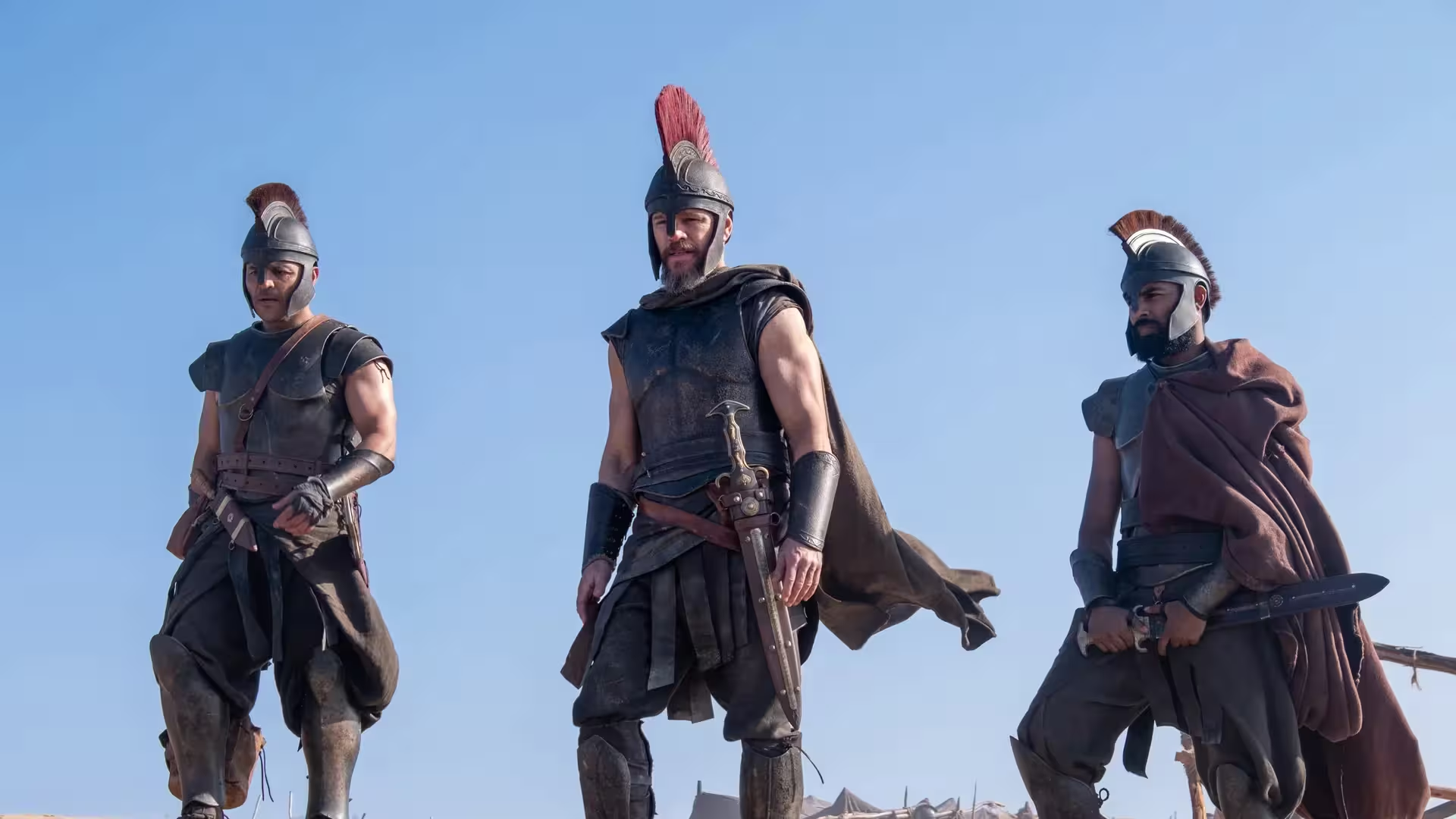
Christopher Nolan should have seen this coming: adapting The Odyssey into an epic Hollywood film is a more ambitious undertaking than any Trojan War. Beyond the considerable narrative and production challenges—especially given this director’s standards—perhaps even he didn’t expect the sheer volume of criticism and raised eyebrows that have followed since the release of the very first trailer. The tone is too dark, too intellectual, too glossy. And then there’s the cast, which boasts names like Matt Damon, Anne Hathaway, Tom Holland, Zendaya, Robert Pattinson, and Charlize Theron: too Hollywood! In fact, upon closer inspection, Nolan’s aesthetic vision—even in this Homeric adaptation—is far removed from the Mediterranean brightness one might expect when thinking of the exploits of Achilles and his companions. In some ways, however, this cinematic endeavor is interesting precisely for this reason, because it breaks away from clichés.
There are, however, those who have continued to dissect the limited material currently available in search of peculiarities. One controversy that has erupted on social media, for example, concerns the actors’ accents: everyone in the film—including Pattison and Holland, who are British—speaks with an American accent. In recent years, international audiences have grown accustomed to watching these epic films—not to mention fantasy and science fiction sagas—with a British accent, which somehow lends a sense of nobility and historically “distances” them from our own times. But these are obviously stylistic choices (Ridley Scott’s first Gladiator in 2000, for example, relied heavily on British accents, while its 2024 sequel seems to pay them almost no mind), and Nolan may have chosen to align with the American way of speaking—not only for convenience given the majority of his cast, but perhaps also to lend the film a more recognizable war-movie feel. These are just hypotheses, but the flurry of online speculation and counter-speculation shows no signs of stopping.
And he doesn’t hold back when it comes to other aesthetic choices made by Nolan either. For example, regarding some of the armor seen in the first trailers—especially that of Agamemnon, King of Mycenae, which reminded some people of Batman’s costumes (a character the director explored extensively in The Dark Knight trilogy). In an interview with Time, Nolan addressed this choice directly: “There are Mycenaean daggers made of blackened bronze. The theory is that they likely had blackened bronze back then. You take bronze, add more gold and silver, and then add sulfur…,” the director explained: “In Agamemnon’s case, Ellen [Mirojnick], our costume designer, is trying to convey just how much more important he is than everyone else. You do that through materials that would have been extremely expensive.”
In the same interview, Nolan also addressed another issue considered controversial by some: the casting of rapper Travis Scott, who had previously appeared on the soundtrack of another of the director’s films, 2020’s Tenet. In this case, Scott appears as a sort of narrator, and some commentators had expected a more traditionally mature or “wise” figure. But Nolan has a very thoughtful explanation for this as well: “I cast him because I wanted to reference the idea that this story has been passed down in the form of oral poetry, which is analogous to rap,” he clarified. In short, even artistic decisions that may seem more daring or controversial from the outside find a plausible, organic, and even decidedly philologically accurate explanation in Christopher Nolan’s Odyssey.
But the “odyssey” of this film began well before its theatrical release, scheduled for July 16, which—in today’s era of viral marketing—is not necessarily a curse from the gods.
Source: TIME
