
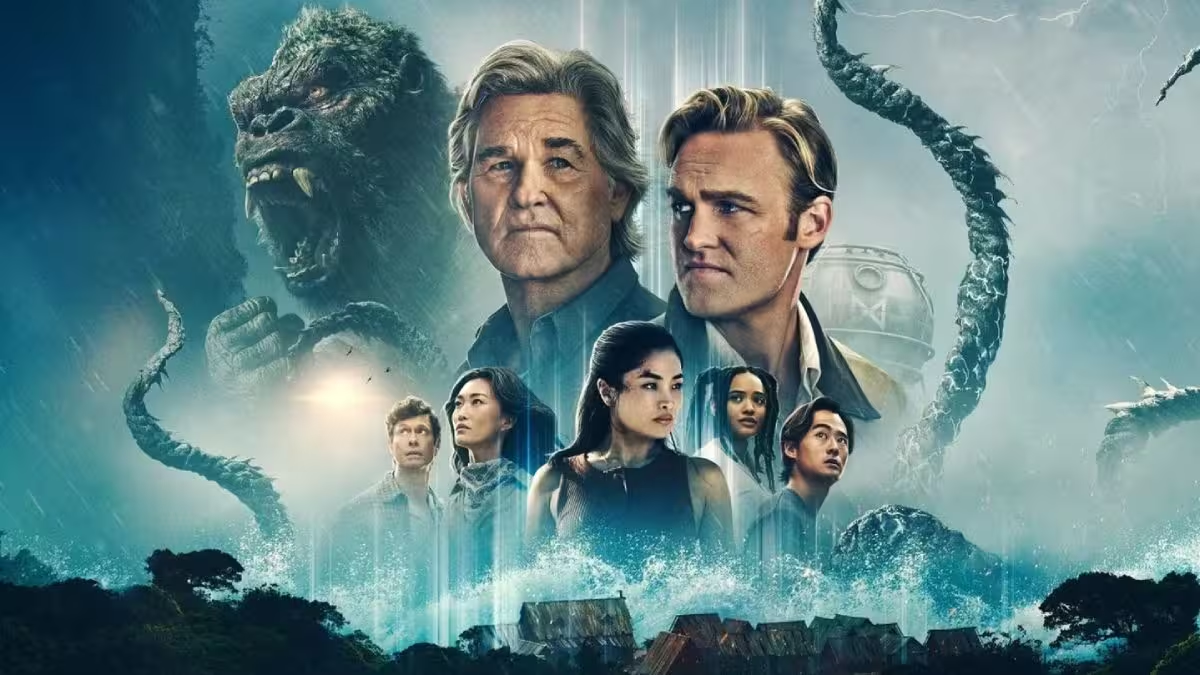
Now in its second season, we can say with certainty: Monarch: Legacy of Monsters is exactly what Agents of S.H.I.E.L.D. was to the MCU—at least during the first half of its run—namely, a sort of companion to the events of the films. And, let’s be clear, we don’t mean this in a negative way; on the contrary, in our opinion, it’s a clever way to delve deeper and add depth to both the narrative universe itself and the major events, viewing them from different perspectives (the build-up of the first season of Agents of S.H.I.E.L.D., which essentially serves as a prequel to Captain America: The Winter Soldier, remains unbeatable).
Monarch: Legacy of Monsters is following precisely this same trajectory, thanks to a second season that, however, doesn’t reach the heights of its surprising 2023 debut. The Apple TV series, in fact, failed to replicate the winning formula, and while far from being boring or lacking, more than a few elements felt out of place to us.
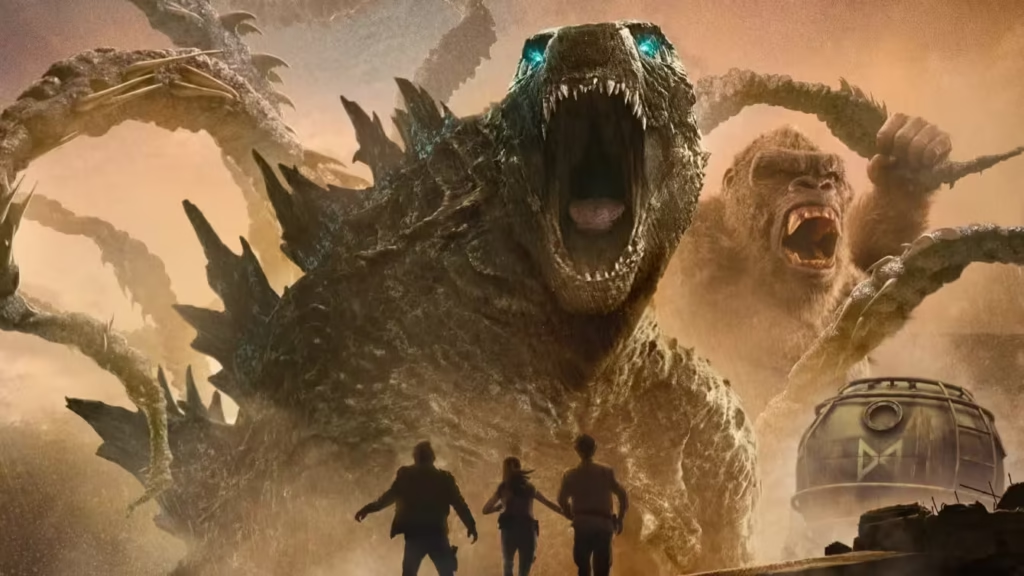
Godzilla, Kong, and Titan X
But, as usual, before diving in, let’s recap the story: we left our protagonists in a generally happy moment, after rescuing their comrades—and especially Keiko (Mari Yamamoto), who remains young due to the temporal distortion in the Titans’ dimension—from Axis Mundi. It’s a shock for Cate (Anna Sawai), Kentaro (Ren Watabe), and Hiroshi (Takehiro Hira), who, before they’ve even had a chance to process this shocking news, find themselves facing an unknown Titan and caught between two warring organizations, Monarch and Apex. In short, a continuation as natural as possible, given that the second season picks up right where the first left off, with a decidedly angry Kong determined to protect his Skull Island.
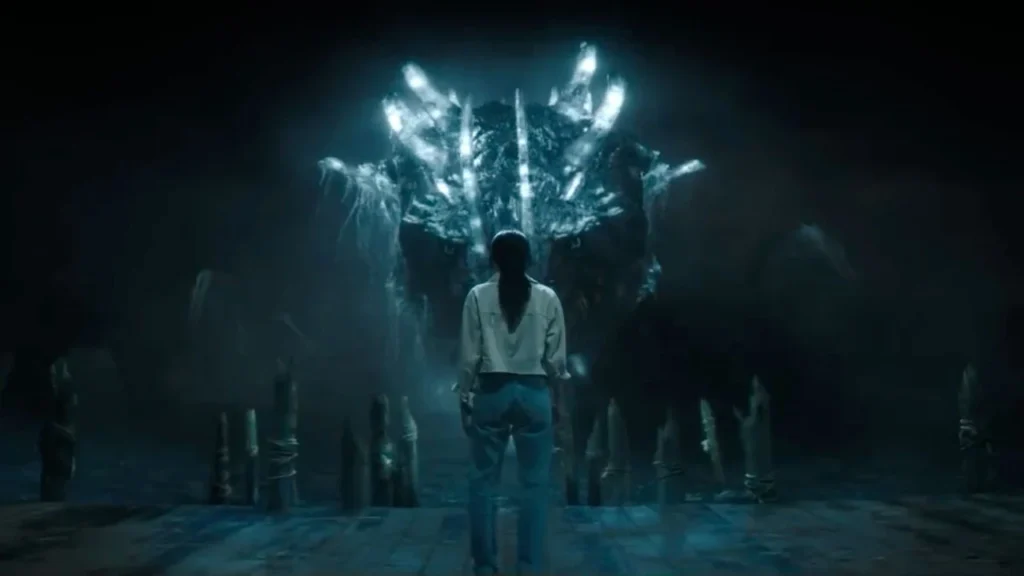
The ingredients have remained the same, and so have the show’s strengths, which naturally lie in the Titans and the emotional core of the story. It took nearly three years to get the second season, and we’ll keep complaining ad nauseam about how such delays are unacceptable (and do more harm than good to the medium), but there’s no denying that Monarch: Legacy of Monsters is a joy to watch, and its monsters alone are worth the price of admission, thanks to their astonishing level of detail and design.
Of course, for strictly narrative reasons, the sheer number of kaiju is no longer the main focus, yet we assure you that the gargantuan complexity of Titan X alone more than makes up for this lack. And there’s no need to resort to the tired cliché of enormous monsters fighting each other: while Monarch certainly doesn’t skimp on this element (offering wholesome and enjoyable entertainment, there’s no denying it), it is the entire lore surrounding the Titans and their presence that serves as the true driving force of the story; it is the compelling sense of mystery and continuous discovery that keeps the viewer glued to the screen; it is the eternal fascination of watching ordinary people grapple with such colossal issues that acts as irresistible bait.
If that weren’t enough, however (since, objectively speaking, the plot does at times veer into that realm of excessive abstraction that never does productions of this kind any favors), Monarch can always rely on its protagonists and their complex emotional arcs, which rarely disappoint when they take center stage. The Randa family’s somewhat jagged journey alone would be enough to fill the season from this perspective, but the series chose not to stop there, placing emphasis on Cate’s guilt or Kentaro’s disillusionment. Fascinating themes that give Monarch (and the individual episodes) the right variety instead of reducing everything to the obsessive search for the Titan of the moment.
Something is missing…
Unfortunately, it must be noted that at the same time, the flaws have remained unchanged, starting with the season’s overall pace, which continues to drag. As with the previous season, in fact, it soon becomes clear that the story conceived by the writers isn’t substantial enough to last 10 episodes, so certain episodes often border on filler: drawn-out situations, minor incidents that have nothing to do with the plot and serve only to slow the protagonists down, repetitions that feel somewhat self-serving; the classic repertoire of series that struggle to fill their seasons consistently—we’ve seen this numerous times in recent years.
However, in addition to the usual mid-season lull that grinds the pace to a near standstill, we must also note the almost complete absence of the dual narrative centered on Shaw as a young man and as an older man (played by Wyatt Russell and Kurt Russell, respectively—a casting choice that remains sensational), which robs Monarch of much of its uniqueness. We say “almost,” because there are indeed sections set in the past, but their use either falls into a sadly didactic trope (the characters in the past happen to stumble upon the exact discovery their present-day counterparts need) or serves to diminish the season’s emotional climaxes, as if the series repeatedly toyed with the idea of using time paradoxes to erase painful events.
It never actually falls into such a trap, but in our view, the mere possibility (which the script makes perfectly clear) strips the most intense moments of their pathos and nullifies the stakes. And a production obsessed with Titans roaming our world causing destruction probably should never lose its sense of risk.
“Monarch: Legacy of Monsters,” the Apple TV series set in the MonsterVerse, continues to prove its strength. Its strengths compared to the first season remain the same: the Titans are marvelous (both in design and technical execution), and watching them in action is simply thrilling; all the lore surrounding them continues to be the show’s true driving force, lending it an excellent aura of mystery and discovery; the protagonists and their complex emotional arcs are compelling and moving. It’s all, in fact, very solid—unfortunately, even in the presence of the same flaws, primarily a very uneven pacing (which by mid-season practically drops to absolute zero). But above all, what makes the difference is the absence of the dual narrative between past and future, which, in the few instances where it does appear here, failed to convince us at all and, in fact, introduces perspectives that significantly diminish the pathos and stakes of the events. In short, there’s still a little bit that needs tweaking.
